


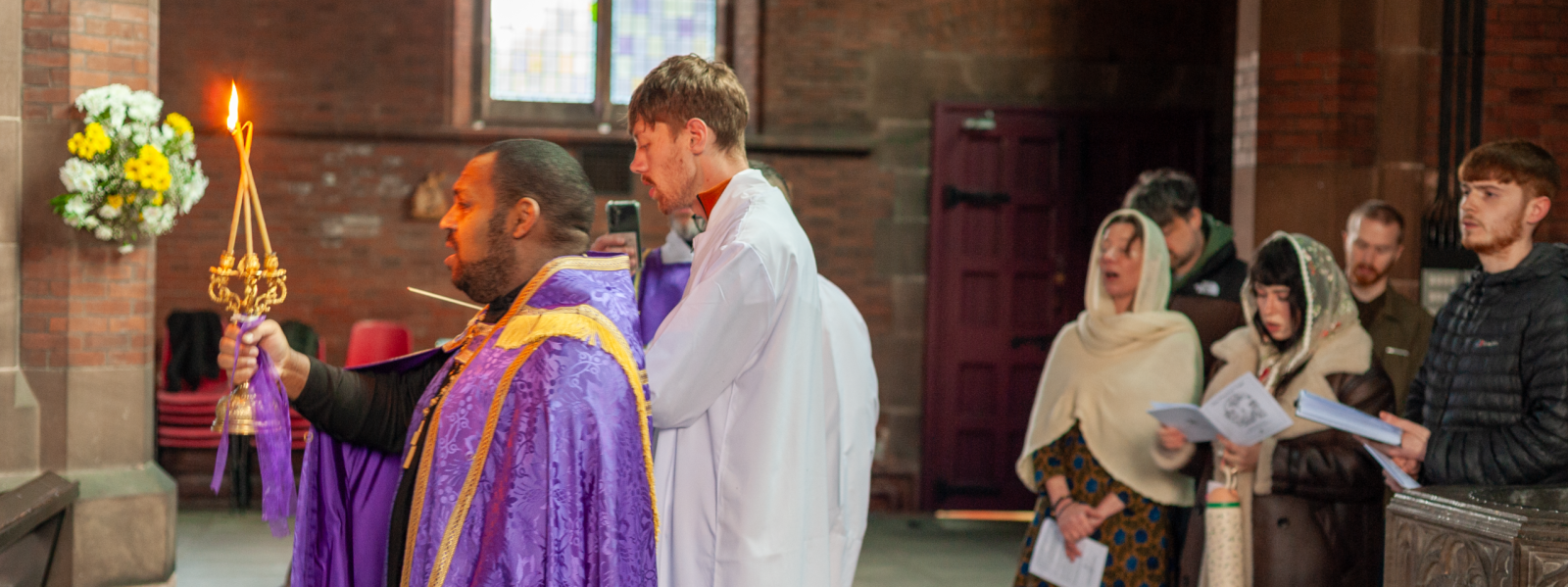
The Restoration of Western Orthodoxy
Beginnings
For more than ten centuries, the British Isles and all of Western Europe were in a fundamental communion of faith with the Christian East in spite of the occasional incidents and quarrels which can be found in all families. However, after the 11th-century schism of the West, much of the western liturgical and spiritual tradition was lost from the Orthodox Church. Yet, small pockets of Western Orthodoxy continued for some centuries in parts of Italy and even on Mount Athos. Then followed a long separation (approximately eight centuries), when each side gradually lost much knowledge of the other.
This changed with a reawakening of interest in the ancient faith. Many in the West experienced the desire to rediscover this Church of the first millennium, this ancient, Apostolic Church, in its living and applied faith, in the splendours of its western liturgy and in its capacity for freedom in God, cleared of the excesses and distortions that developed after the West went into schism, and which were heightened at the Protestant Reformation. This encounter brought about the resurgence of Western Orthodoxy.
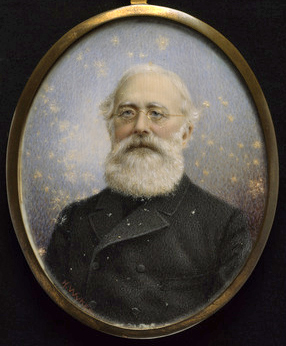
In the year 1860, a former Roman Catholic priest and convert to Orthodoxy, by the name of Julian Joseph Overbeck, received approval from the Russian Orthodox Church for a scheme of his. He recognised that the Church in the West in the first millennium had its own worship, its own customs, and spirituality, and prayers, and chants, and saints, and that many of these things had been preserved in the worship of Roman Catholics and to a lesser extent, Anglicans. To his mind, there was no reason that an Englishman, wanting to convert to Orthodoxy, should have to essentially become Greek, or Serbian, or Arabic, but that these forms of prayer and worship, which had nourished the saints of the west for a thousand years, could be restored to use in the Orthodox Church, for the benefit of those westerners who wanted to celebrate their rightful heritage while living the Orthodox faith and life in the Saviour, Jesus Christ.
He published a journal to raise awareness of his scheme on the British Christian landscape, and did careful research into the Roman Rite to produce a form of the Mass and daily offices that would be compatible with the Orthodox Faith.
Sadly, Overbeck’s scheme did not take off, for although it was sound in principle, there was one significant flaw: nobody was interested. The Roman Catholic church had been emancipated only 40 years earlier, and was experiencing a period of growth. Meanwhile, the Oxford Movement, which had started in the Church of England at about the same time, was beginning to blossom and flourish. All of which is to say that the people who were interested in recapturing something close to apostolic faith and practice were already having their needs met elsewhere. The timing was simply wrong, and so the scheme was laid to rest. However, the precedent had been set: the Orthodox Church was willing to provide a familiar home for its separated children in the West.
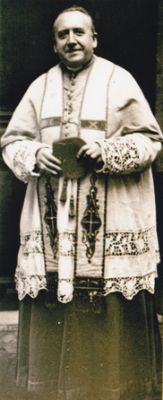
In Western Europe, the seed planted by Julian Overbeck began to bear fruit in the 1930s, when the torch was taken up, with the help of Father Lev (Gillet), by Father Irenaeus (Winnaert), a former independent Catholic bishop who brought his flock under the protection of the Russian Orthodox Church. By a formal decree of the Holy Synod of Russia they were received into the Orthodox Church, renamed the Western Orthodox Church, and given a blessing to retain their Western liturgical forms of worship, prayer, and spirituality.
Initially, Fr Irenaeus’s group continued their use of the Roman rite as they had in their Old Catholic days, with very minor amendments to bring it in line with Orthodox doctrine. However, soon afterwards, work commenced to restore, insofar as was possible, a rite of Gallican tradition.

This was the labour of love of Fr Eugraphe Kovalevsky, who was of Russian birth but had, as a teenager, fled Soviet Russia with his family for the safety of Western Europe. He developed a love for his new home and, while on a pilgrimage to her shrine church in Poitiers, was inspired by Saint Radegund to restore to the people of France his native Orthodox Faith, which was also theirs by right. He came to love the Western Rite, memorised the Roman Mass, and said his daily prayers from the Breviary. Therefore, when he met Fr Irenaeus, with his vision for a church grounded in Orthodoxy and steeped in the western liturgical, spiritual, and cultural tradition, it was only natural that he would embrace this church as his home.
Eugraphe was ordained a priest in 1937, to find that his first liturgical celebration would be the funeral of Fr Irenaeus, who fell asleep in the Lord having lived to see his flock received into Orthodoxy only weeks earlier. Fr Eugraphe was now charged with leading the fledgling Western Orthodox Church, and it was during this time that he started work on researching the ancient Gallican rite of the Mass in the hope of restoring it for modern-day use, as an authentic local expression of the Orthodox Faith. For this, he relied on the detailed descriptions of the worship of 6th-century Paris in the letters attributed to St Germanus of Paris, the writings of such Gallican fathers as St Caesarius of Arles, and the liturgical decrees of certain local councils, as well as the surviving liturgical books of the Gallican and related traditions.
By 1946, Father Eugraphe had introduced to his church not only a restored Gallican Mass (the Divine Liturgy according to Saint Germanus), but also a full cycle of the Divine Office based closely on the Benedictine Office, as well as orders for the Sacraments and other rites. These rites were supplemented in small ways with elements of the worship of the Orthodox East, reflecting the unity of the Church and also in keeping with the influence that the east had had on western – and specifically Gallican – worship, even in ancient times. Music for these services was composed by Father Eugraphe’s brother, Maxime Kovalevsky, who was a deacon in the Russian Orthodox Church and renowned composer of liturgical music. The church became established in its life of prayer, worship of God, and mission to western people.
Challenges and Trials
Sadly, after nearly two decades, differences among the clergy about the form of worship to be used, along with jealousy at the news that the Patriarch of Moscow intended to have Father Eugraphe consecrated as bishop for the Western Orthodox Church, provided the fertile soil needed for those opposed to the Western Rite to plant seeds of discord. Accusations of impropriety were brought against Father Eugraphe, who, without investigation, was removed from his position of dean for the Western Rite churches early in 1953. When an investigation later that same year revealed the accusations to be unfounded, it was too late. Upset by the treatment he had received, Father Eugraphe had resigned from the Moscow Patriarchate, and all of the parishes and the majority of the clergy of the Western Orthodox Church had left with him.

After a brief period of isolation, in 1959, the group (by this time known as the Orthodox Church of France) came under the protection of the Russian Orthodox Church Outside Russia, and was cared for by Archbishop John (Maximovitch, later Saint John the Wonderworker), who at the time was the ruling bishop of the ROCOR Western European diocese, with his see in different times at Paris and at Brussels. At his request, the church was again renamed, this time as the Orthodox-Catholic Church of France (ECOF).
This began a time of great blessing for the church. Under St John’s care, the church’s spiritual and liturgical life flourished. St John was a dedicated pastor to his clergy and people, and he himself celebrated the restored Gallican Mass on a number of occasions. Seeking to give the Western Orthodox Christians a sense of permanence to further their mission, along with Archbishop Theophilus (Ionescu) of Sèvres, and with the blessing of the ROCOR Council of Bishops, in 1964 he consecrated Father Eugraphe Kovalevsky as the bishop of Saint-Denis, under the name John-Nectarius – the first Western Orthodox bishop for nearly a millennium.
On that occasion, addressing the newly-consecrated bishop, St John Maximovitch imparted the following words of wisdom:
‘Unfortunately, many of our compatriots, despite being good children of the Orthodox Church, cannot always distinguish the essence of Orthodox doctrine from its manifestations in one form or another, depending on local conditions and the character of the people concerned.
‘You will have to face misunderstanding and adversity in pious men acting not by bad designs, but by lack of understanding.
‘Be brave. Hold all the afflictions and do not be afraid of them. Be benevolent to those who obstruct you; strive, where possible, not to be scandalous and not to induce temptation, so that those who oppose you will come to the knowledge of the truth, because the Lord desires the salvation of all.’

The repose of Archbishop John in 1966 came as a severe blow to this young western church, for no other advocate for them could be found on the ROCOR Synod of Bishops, who sought to undo the work of St John and, like the Moscow Patriarchate before them, put pressure on the church to abandon their Western Orthodox identity and adopt Byzantine forms of worship.
The Western Orthodox Christians again found themselves alone. This time, however, the church was not left without episcopal care, for the new Bishop John of Saint-Denis led them faithfully until his repose in 1970.
After Bishop John fell asleep in the Lord, the Orthodox-Catholic Church of France found a home within the Romanian Orthodox Church with the support of Patriarch Justinian (Marina), with permission to retain their Western Orthodox identity under the leadership of Bishop Germain of Saint-Denis, who was consecrated in 1972 with the blessing of the Holy Synod of Bucharest. The church experienced considerable numerical growth during this time as the Western Orthodox mission reached more and more native western people, bringing them to life in the Saviour.
However, over time, the Byzantine and Slav diaspora had difficulties understanding and accepting the Western Orthodox experience, and put pressure on the Romanian Church, leading it to curtail the missionary efforts of the Western Orthodox Christians, forcing them to relinquish the missions and monastic communities they had formed in Germany, Italy, and elsewhere outside of France. Ultimately, this was not enough and the Patriarchate of Bucharest eventually severed ties with Bishop Germain and the Orthodox-Catholic Church of France in 1993.
This led to a sad period in the history of the Western Rite communities and, due to human weakness, some irregularities crept into the life of the Orthodox Catholic Church of France. Many Western Orthodox parishes remained part of this jurisdiction. Others, not wanting to exist in isolation from the wider Church, joined the Serbian or Romanian churches as individual parishes, while yet others grouped together to form a new jurisdiction, (the Orthodox Church of the Gauls), receiving apostolic succession through the Greek Old Calendarist community.

Signs of Hope
Over the history of the various Western Rite Orthodox communities, what has been revealed is that the churches based in traditionally Orthodox lands often have great difficulty in understanding that one can profess the Orthodox Faith and still be western. Individual bishops are sometimes sympathetic to the western missionary cause but it has often happened that, after some years, driven by a cultural insularity and the understanding that Orthodoxy must only be eastern, many of the eastern churches have tried to abolish the restoration of Western Orthodoxy. The Western Orthodox communities in France were no exception to receiving such treatment, with the result that the communities which are descended from the united Western Orthodox Church, originally established amidst such hope in 1936, are now dispersed among different jurisdictions, which vary in the recognition they receive from the wider Orthodox Church.
Yet, despite their experiences, these Western Orthodox Christians have kept before their eyes the original vision of their founders, Father Irenaeus and Bishop John of Saint-Denis, of St Radegund of Poitiers, and of St John the Wonderworker: of an Orthodox church calling western people to the saving Faith in Jesus Christ, expressed using the forms of worship – the Mass, the Divine Office, the hymns, the prayers – that are accessible to western people, and which were prayed and sung by the very saints who walked these western lands in ancient times, who entered into communion with God here, and whose blood and tears hallowed this soil.
Today, with new parishes and missions having been founded and with the reawakening of faith in Christ that is being observed in many places, it is our fervent hope that these communities, following the Western Orthodox tradition of ancient Gaul, may one day be restored to the fullness of sacramental union with each other and the whole body of Christ’s holy Orthodox Church, as a witness of the universality of the love of the Saviour in drawing all people to Himself.
At the prayers of St Radegund of Poitiers, St John the Wonderworker, Bishop John of Saint-Denis, and Fr Irenaeus of Paris, may God continue to bless these efforts to bring all people to salvation in Christ.